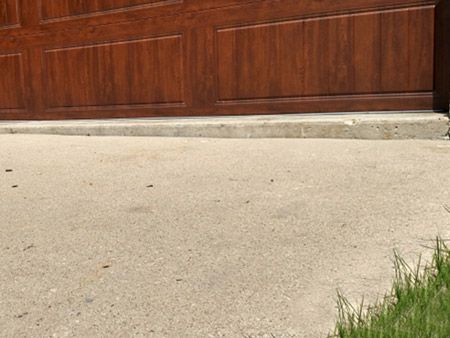
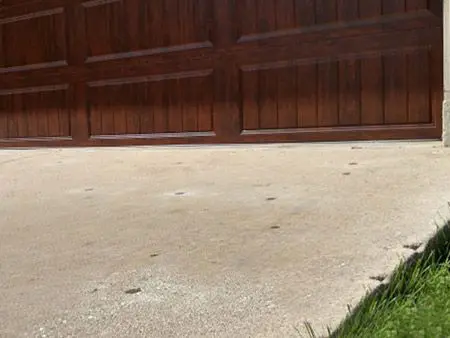
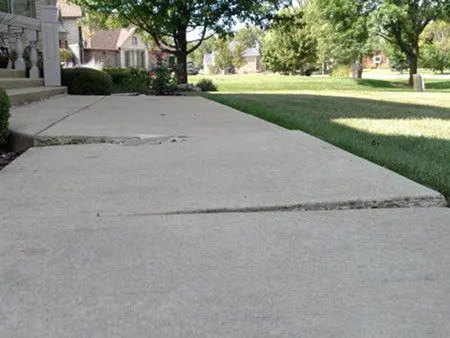
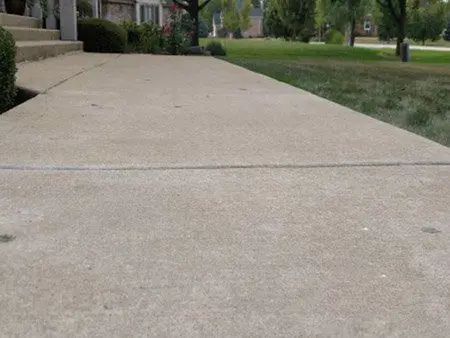
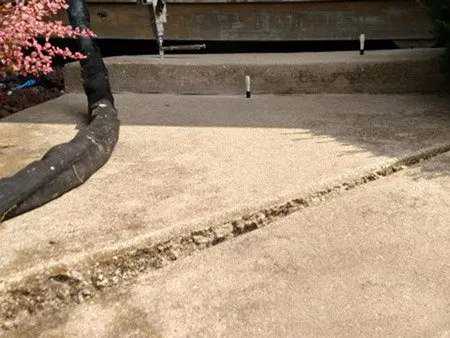
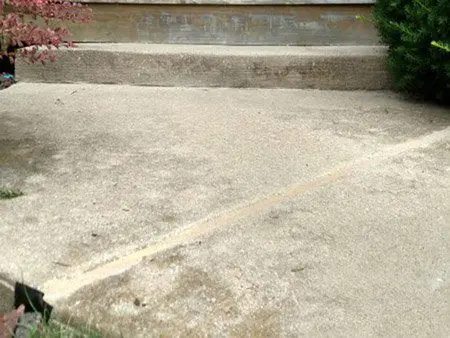
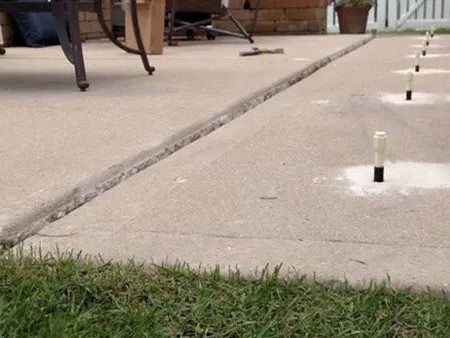
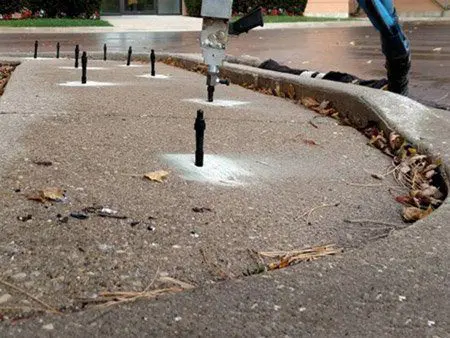
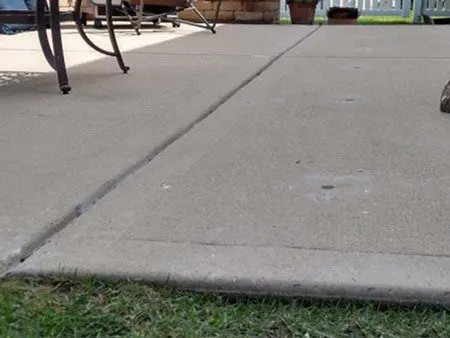
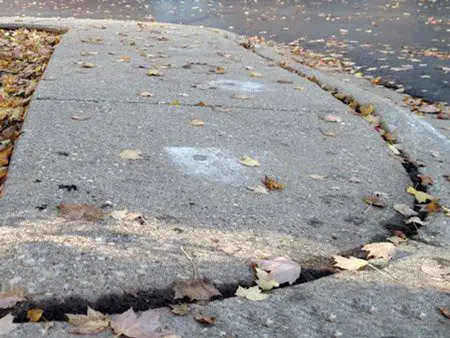
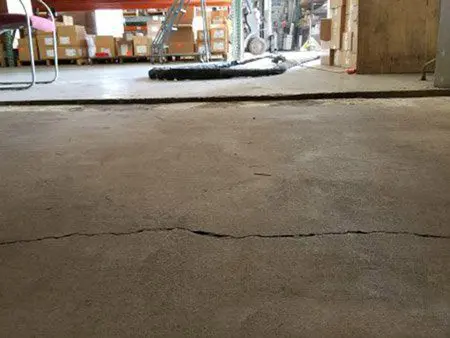
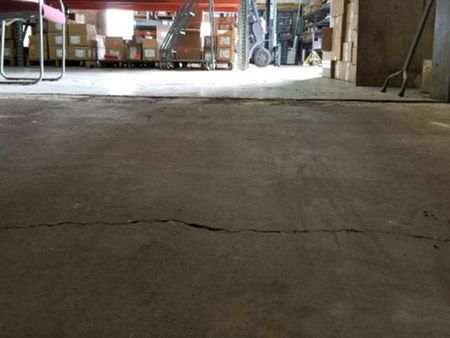
Sunken slabs create abrupt transitions, collect runoff, and interrupt otherwise well-maintained outdoor spaces. Polyurethane concrete raising can reposition many intact panels without full removal.
Inverness properties often combine landscaped approaches, long driveways, front walks, patios, and garage aprons on varied grades. Soil consolidation and water movement can leave one panel lower than the next even when the concrete remains structurally usable. Raising addresses the missing support and the resulting elevation difference.
We inspect the slab, cracks, joints, fixed edges, and drainage before drilling small injection holes. Expanding polyurethane fills the void and raises the panel in measured stages. Explore our polyurethane concrete raising method to see how it can preserve sound flatwork while limiting demolition.
Concrete Raising for Established Residential Sites
A front walk must meet the stoop cleanly, a driveway needs a workable garage transition, and a patio should direct water away from the home. Each lift is planned around those fixed elevations and the condition of connected panels. The goal is useful improvement without forcing the slab beyond safe limits.
The Estimate Guard Promise: Best Price. Best Warranty. Guaranteed. With Acme’s Estimate Guard, you never have to worry about overpaying for professional concrete raising. We guarantee a better price and a better warranty than any competitor—so you get the best overall value every time. It’s our commitment to fair pricing, quality workmanship, and long-lasting results.
Frequently Asked Questions
Which Inverness slabs can be raised?
Many settled driveways, walkways, patios, garage floors, and stoops can be evaluated. The slab should remain structurally sound enough to lift as a panel. Severe deterioration may make replacement more practical.
Why does concrete sink on a landscaped property?
Water can follow grades, downspout routes, joints, or utility backfill and affect the supporting soil. Natural consolidation and freeze and thaw cycles may add to the movement over time.
Can raising improve water drainage?
Lifting can improve elevation where a settled slab creates a low spot, but available pitch and fixed thresholds limit the correction. Broader grading or drainage issues may require separate work.
Will the cracks disappear after lifting?
Existing cracks may align better, but they will not vanish. Crack or joint sealing can be considered after the slab reaches its corrected position and the final opening can be evaluated.
Are the drilled holes patched?
Yes. Injection holes are patched after lifting. The patch may remain visible because new material cannot perfectly match the color and texture of weathered concrete.