Bloomingdale is part of the Salt Creek watershed, where Springbrook Creek, stormwater ponds, wetlands, and flood-control areas move and store runoff. Constructed walls along private ponds or drainage features can lose soil through joints, cracks, or penetrations, leaving unstable backfill behind the visible surface.
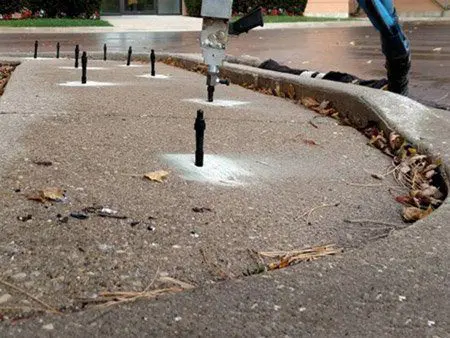
Acme evaluates the wall condition, water path, nearby settlement, and accessible voids. Where injection is suitable, expanding polyurethane can fill empty space and support loose soil with limited disruption to surrounding walks, patios, and landscaped ground.
Springbrook Creek and the Meacham Grove flood-control area illustrate how important water storage and controlled drainage are around Bloomingdale. On private properties, seawall stabilization should address both the empty space behind a wall and the route water uses to reach it.
The Estimate Guard Promise: Best Price. Best Warranty. Guaranteed. With Acme’s Estimate Guard, you never have to worry about overpaying for professional concrete raising. We guarantee a better price and a better warranty than any competitor—so you get the best overall value every time. It’s our commitment to fair pricing, quality workmanship, and long-lasting results.
Frequently Asked Questions
What shoreline structures are common repair candidates in Bloomingdale?
Private pond walls, detention-basin edges, drainage channels, and other concrete water-control structures may develop voids. Suitability depends on wall stability, access, erosion source, and the location of the empty space.
Why does soil settle behind a pond wall?
Runoff can carry fine particles through gaps in the wall or around drainage penetrations. As material leaves, the ground above loses support and may sink even before major wall movement is visible.
Can injection repair erosion near an outlet pipe?
Accessible voids around a penetration may be filled, but the pipe, connection, and active water path must be evaluated. A leaking or damaged drainage component may require separate repair first.
Will polyurethane affect nearby landscaping?
The method typically uses small access points and can reduce the need for broad excavation. Exact disturbance depends on wall access, vegetation, utilities, and how far the void extends.
When does a wall need replacement instead?
Replacement or structural repair may be necessary when the wall is severely leaning, displaced, fractured, or missing major sections. Injection is intended to stabilize suitable existing structures, not rebuild failed ones.