Seawall and Shoreline Wall Repair Across Cook County
Cook County includes Lake Michigan shoreline areas, the Des Plaines and Chicago River systems, the Cal-Sag Channel watershed, smaller streams, and thousands of ponds and stormwater facilities. The structures along these water edges face different flow, access, soil, and seasonal conditions, so repair should never be based on location name alone.
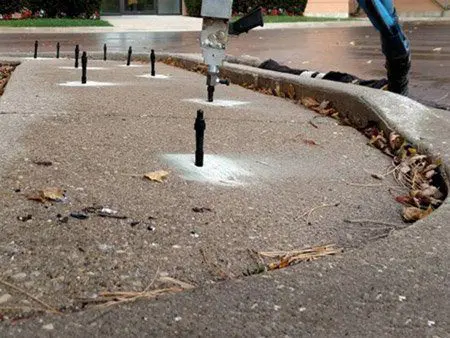
Acme evaluates wall movement, soil loss, drainage penetrations, nearby concrete, and reachable voids. When the structure is suitable, targeted polyurethane injection can fill empty space and help stabilize backfill while limiting disturbance to the surrounding property.
Cook County stormwater planning covers six major watersheds, each with different waterways and erosion concerns. Our seawall repair approach focuses on the specific wall, soil, and water path present at the property rather than applying one generic solution across the county.
The Estimate Guard Promise: Best Price. Best Warranty. Guaranteed. With Acme’s Estimate Guard, you never have to worry about overpaying for professional concrete raising. We guarantee a better price and a better warranty than any competitor—so you get the best overall value every time. It’s our commitment to fair pricing, quality workmanship, and long-lasting results.
Frequently Asked Questions
What types of Cook County seawalls does Acme evaluate?
We assess suitable concrete shoreline walls, pond edges, drainage structures, and similar retaining sections. The material, access, wall stability, water conditions, and source of soil loss determine whether polyurethane repair fits.
Is the repair different for a pond and a river wall?
It can be. Water level changes, current, drainage outlets, wave exposure, access, and wall construction vary widely. The evaluation identifies the conditions that matter at that particular Cook County property.
How can I tell if soil is washing out behind the wall?
Watch for depressions, soft areas, repeated holes, separated joints, exposed openings, or nearby slabs that begin to settle. These signs may indicate a void even when the wall face remains upright.
Can a seawall be repaired without major excavation?
Targeted injection often uses small access points and can limit excavation when the wall and voids are suitable. Extensive structural failure, inaccessible damage, or an uncontrolled water source may require a different approach.
Do property managers need to coordinate access?
Yes. Commercial, HOA, and shared properties may need plans for gates, paths, parking, shoreline access, utilities, and protection of common areas. These details are reviewed while defining the project scope.