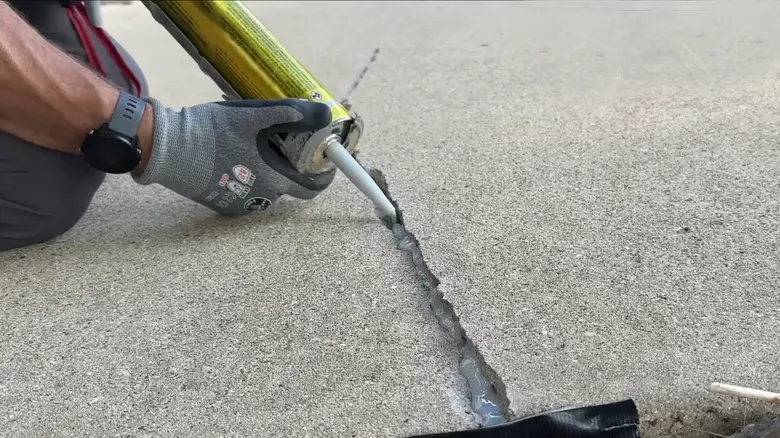
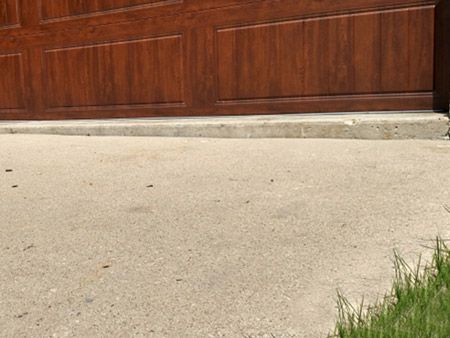
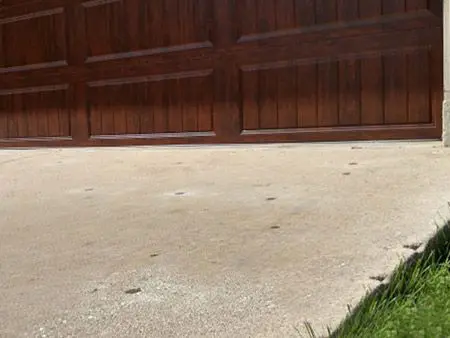
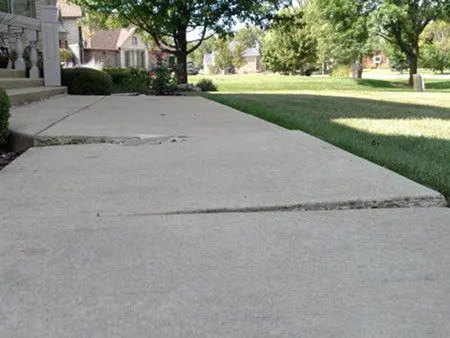
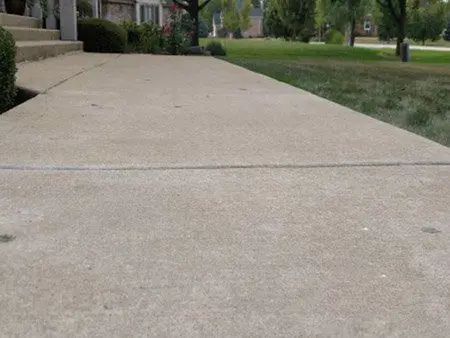
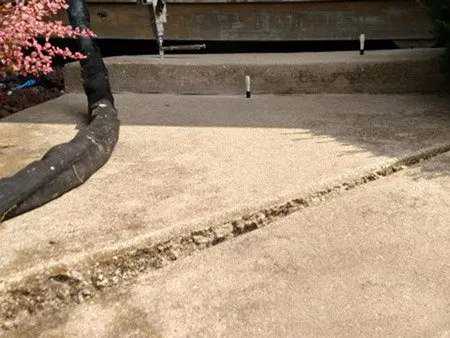
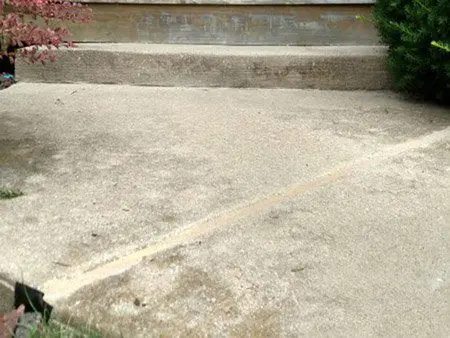
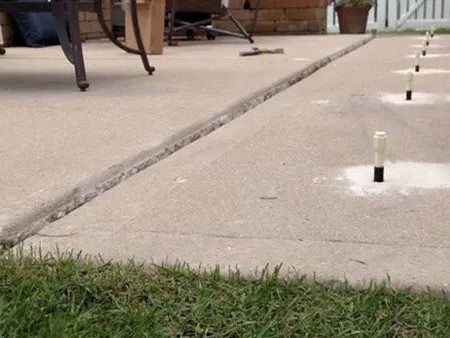
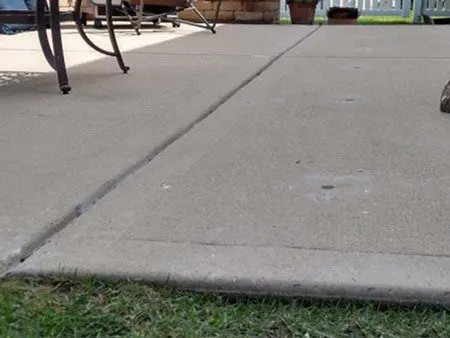
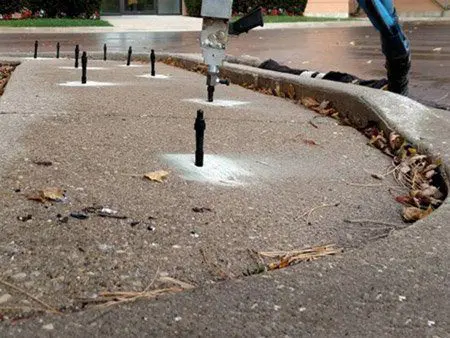
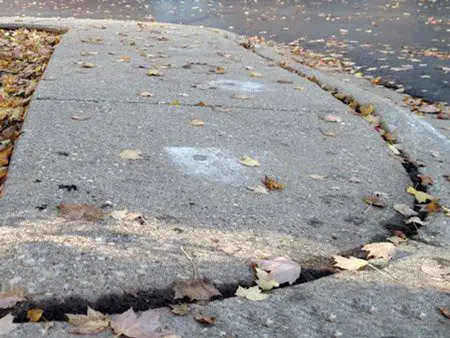
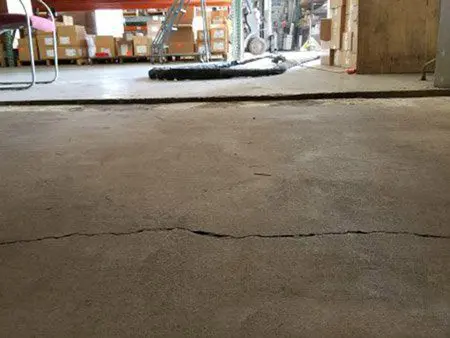
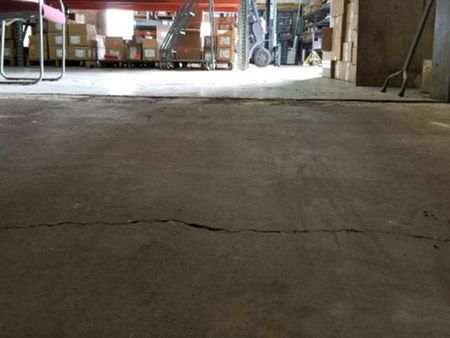
Lake Villa’s water-oriented setting can create short drainage routes between roofs, lawns, paved surfaces, and low areas. An open joint may collect sand, soil, leaves, and water, allowing moisture to reach the material beneath the slab. Acme removes failed sealant and loose debris, prepares stable joint edges, controls the application depth, and installs flexible exterior caulk. This maintenance is most effective when settled slabs and active drainage problems are addressed first.
Sealing Joints in Lake Villa’s Water-Oriented Setting
Moisture moving from roofs, lawns, and lake-area grades can repeatedly reach driveway and walkway seams. Acme’s professional joint sealing closes selected gaps after thorough preparation.
The Estimate Guard Promise: Best Price. Best Warranty. Guaranteed. With Acme’s Estimate Guard, you never have to worry about overpaying for professional concrete raising. We guarantee a better price and a better warranty than any competitor—so you get the best overall value every time. It’s our commitment to fair pricing, quality workmanship, and long-lasting results.
Frequently Asked Questions
Why is caulking useful on Lake Villa concrete?
It helps reduce water, sediment, and vegetation entering through treated joints. It does not waterproof the entire slab or property.
Can a pool-deck joint be resealed?
Often, yes. Moisture exposure, joint size, surrounding finishes, access, and the product’s cure requirements must be considered.
What happens if water stands beside the joint?
Caulking may close the seam, but standing water indicates a grading or drainage condition that sealant alone will not correct.
Will new caulk match weathered concrete exactly?
Not necessarily. Material is selected for performance and an appropriate appearance, but color and texture can differ from older concrete.
Can joints be sealed after concrete leveling?
Yes. Leveling first allows the slabs to reach their final positions before the joint is prepared and sealed.