Mount Prospect Garage Floor Lifting

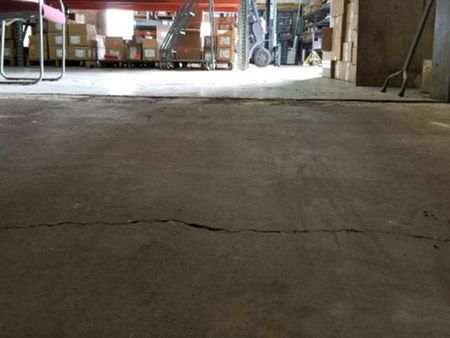
Mount Prospect grew up around the Chicago and North Western rail line, and a lot of its housing stock is postwar ranch and cape cod homes where the garage was sometimes added a few years after the original house went up. When a garage was poured separately from the home’s foundation, it’s not unusual for the two to settle at slightly different rates over the decades, which shows up as a step or a crack right where they meet.

We fix that by lifting the garage slab itself rather than tearing it out, which keeps the repair quick and considerably less expensive than a full replacement.
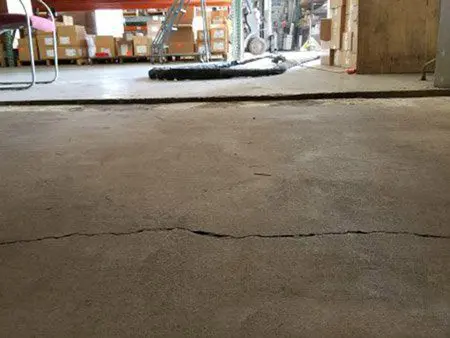
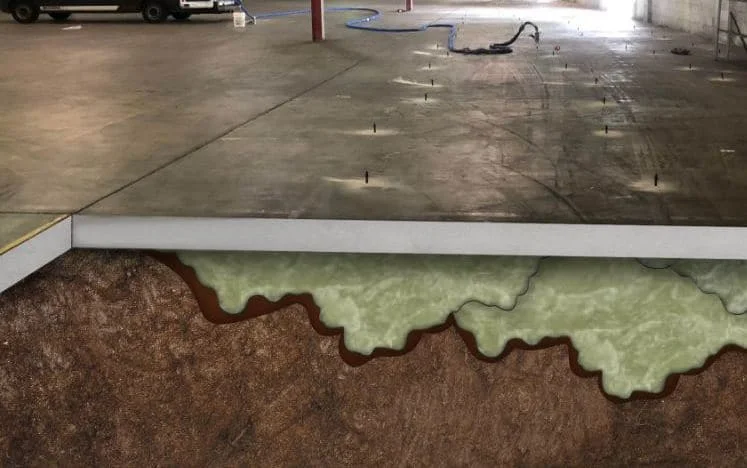
A warehouse floor with a cutaway showing foam injection beneath the concrete slab, illustrating ground stabilization and floor leveling—a technique also used for Garage Floor Lifting in Crystal Lake.

Why the garage and the house don't always settle together

A garage poured as an addition to an existing home was rarely tied into the same foundation footings as the house. Over time, especially with clay soil that shifts seasonally, the garage slab can settle independently, which is why you’ll often see a visible step or a widening crack specifically at the seam between the garage floor and the house.

Foam or mudjacking for this kind of settling

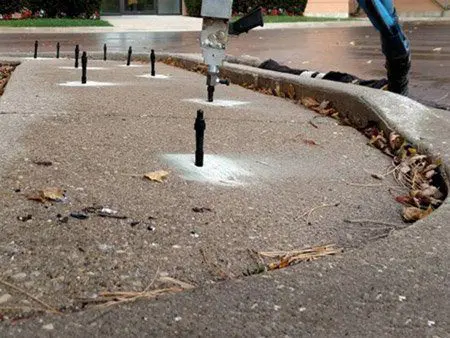
Foam is our usual choice for garage floors because it’s lightweight and fast, which matters when the slab in question is already separated from an adjoining foundation. Mudjacking can still make sense for a larger area where cost per square foot outweighs speed. We’ll tell you which one fits after seeing the slab.
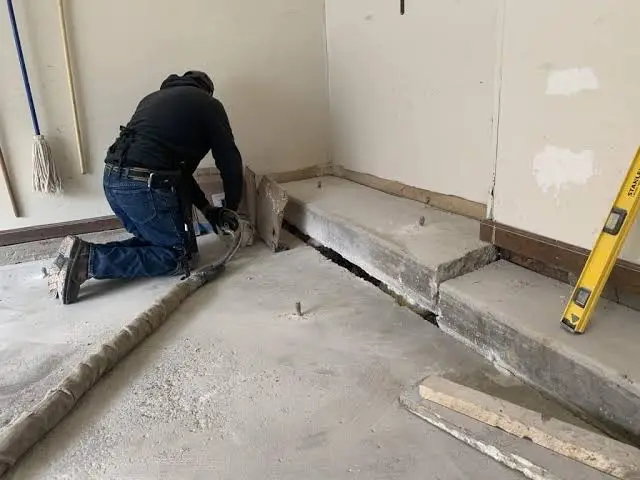
A person in dark clothing kneels on the floor, repairing or cutting a section of cracked concrete near a wall in what appears to be a garage or basement. Tools and construction materials are nearby, suggesting that Garage Floor Lifting in Crystal Lake may be underway to restore stability and ensure a level surface.

How we lift the floor

Signs the garage slab has settled

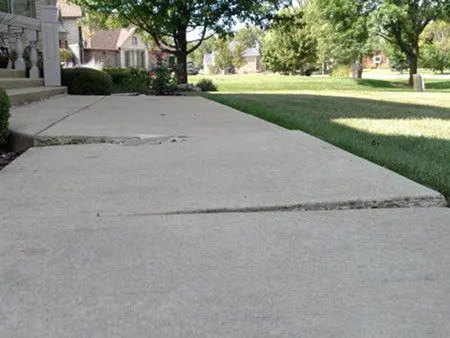
• A step or gap where the garage floor meets the house
• A crack running along that same seam
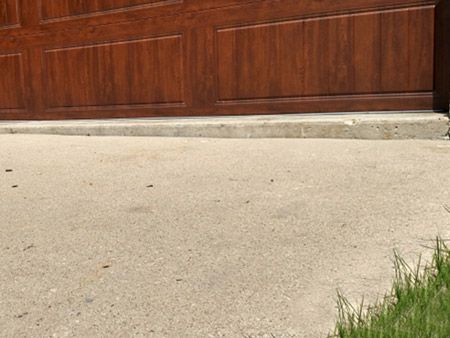
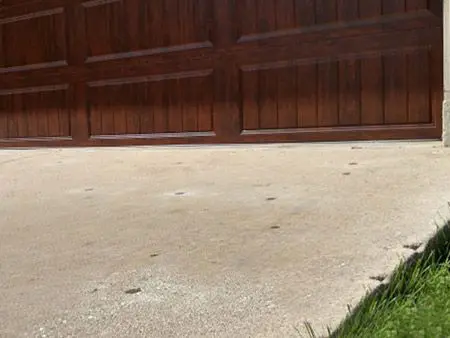
• The garage door no longer sitting flush at the bottom
• A dip you notice when pushing a lawn mower or bike across the floor
• Water collecting near the back or side wall instead of draining out

If the settling seems concentrated near where the garage meets the house, that’s a strong sign the two were poured separately and are moving at different rates.

Call today for a FREE Estimate!

If your garage floor has a gap at the door, a crack that keeps growing, or a slab that dips toward the back wall, we’ll come take a look. The assessment is free and there’s no obligation attached to it.

Call us at (815) 264-2200 or request a free estimate online. Acme Concrete Raising & Repair · 824 S Main Street, Ste 105, Crystal Lake, IL 60014.

Frequently Asked Questions

My garage was added after the house was built. Does that change the repair?

Not the repair itself, but it does explain why the garage floor and the house foundation are moving independently. We lift the garage slab on its own, which is exactly the kind of job this method handles well.
We can seal it once the slab is lifted and the gap is reduced. A full disappearance of the crack line usually isn’t realistic, but the ongoing movement and water intrusion can be addressed.
Very little. We work directly on the slab with small equipment, and most homeowners are back to parking in the garage the same day.
Not the repair itself, but it does explain why the garage floor and the house foundation are moving independently. We lift the garage slab on its own, which is exactly the kind of job this method handles well.
Yes, and we regularly work on both the older homes closer to the Metra line and the newer construction further out in the village.