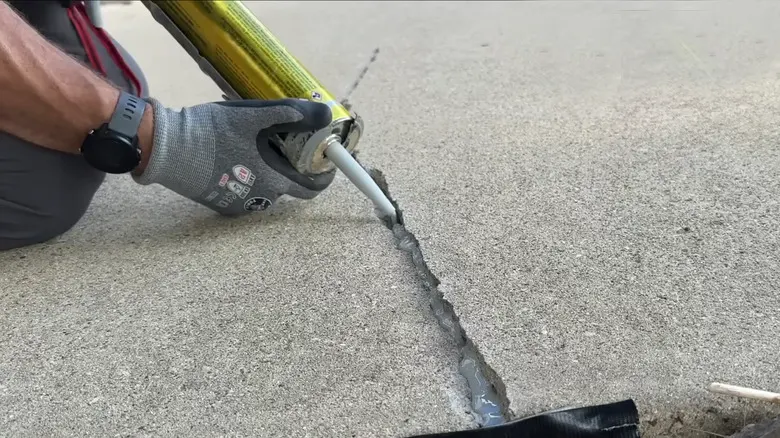
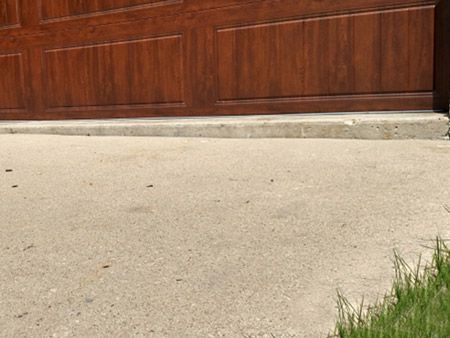
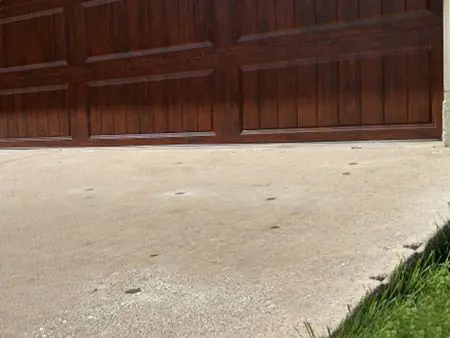
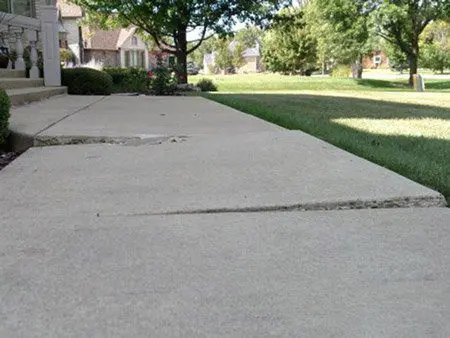
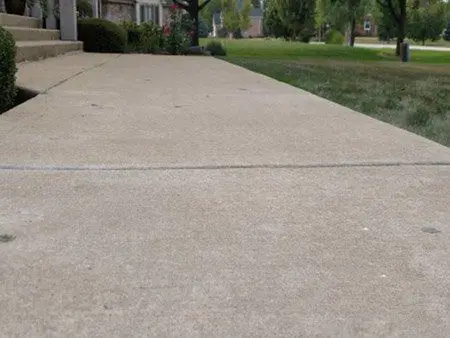
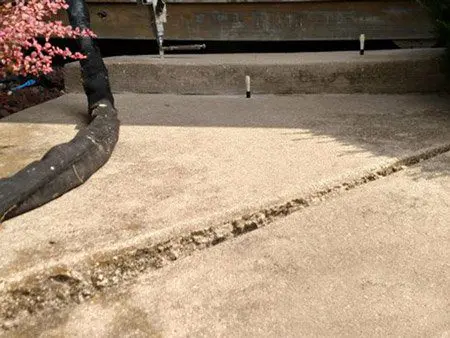
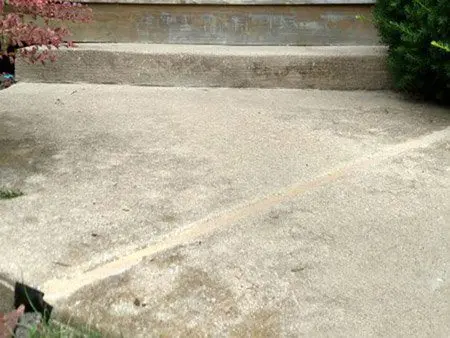
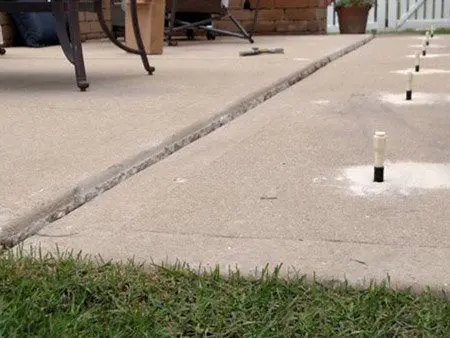
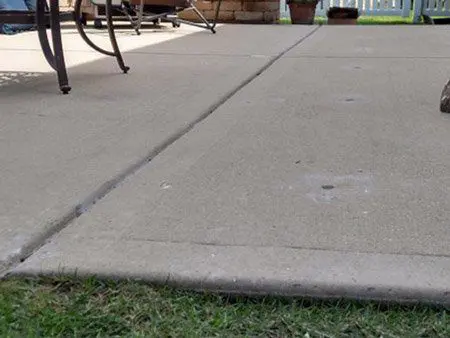
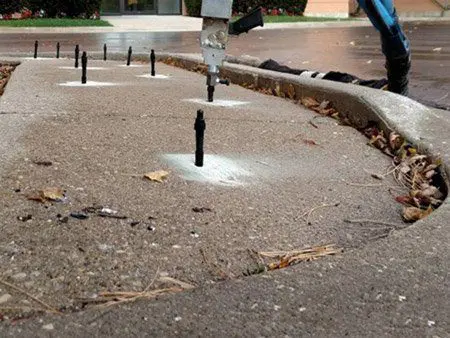
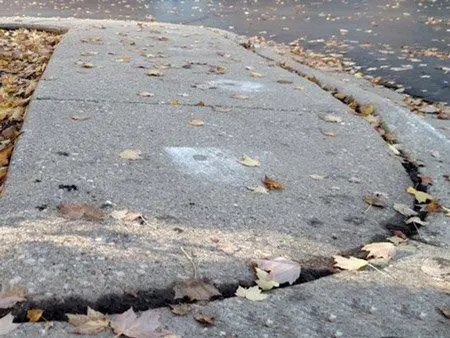
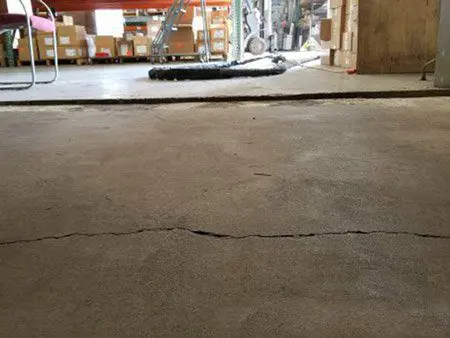
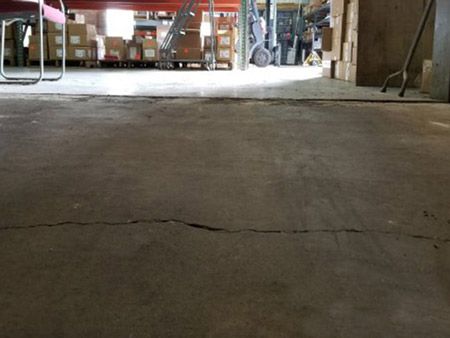
Open joints let water and debris reach the edges and base of concrete slabs. Professional caulking helps protect driveways, walks, patios, and garage transitions while allowing planned joint movement.
Wayne’s rural residential and equestrian character includes long driveways, broad garage approaches, walkways, patios, and concrete around accessory structures. These surfaces move with temperature changes and regular use. When joint sealant shrinks, splits, or disappears, the opening can collect grit and route water below the slab.
We remove loose material where needed, prepare the joint, and install an appropriate flexible sealant with attention to joint width and depth. Caulking does not level settled concrete, but it can support a broader maintenance plan. Review our professional concrete caulking service for more details.
Driveway control joints, the seam between a garage floor and apron, and gaps around walks or patios each behave differently. We look for failed sealant, edge deterioration, trapped debris, and nearby drainage so the work focuses on joints that can benefit from cleaning and resealing.
The Estimate Guard Promise: Best Price. Best Warranty. Guaranteed. With Acme’s Estimate Guard, you never have to worry about overpaying for professional concrete raising. We guarantee a better price and a better warranty than any competitor—so you get the best overall value every time. It’s our commitment to fair pricing, quality workmanship, and long-lasting results.
Frequently Asked Questions
Which concrete joints should be caulked in Wayne?
Open control joints, expansion joints, and selected cracks that admit water or debris may benefit from sealing. The joint design, movement, width, depth, and surrounding concrete condition determine the appropriate preparation and material.
Can caulking stop a slab from sinking?
Caulking helps limit water and debris entering through surface openings, but it does not replace missing soil or raise concrete. A settled slab may need leveling before the final joints are sealed.
Why does old concrete sealant pull away?
Age, sunlight, temperature movement, poor adhesion, incorrect joint depth, and moisture can contribute to failure. Proper cleaning and preparation are important before installing replacement sealant.
Should driveway joints be sealed before winter?
Joints can be sealed when surface and weather conditions meet the material requirements. Completing needed work before repeated freezing may help reduce water entry, but scheduling depends on temperature, moisture, and preparation needs.
Will new caulk match the concrete exactly?
Sealant colors are chosen to coordinate with concrete, but weathered slabs vary in tone and texture. The primary purpose is a flexible, well-prepared seal rather than an invisible color match.