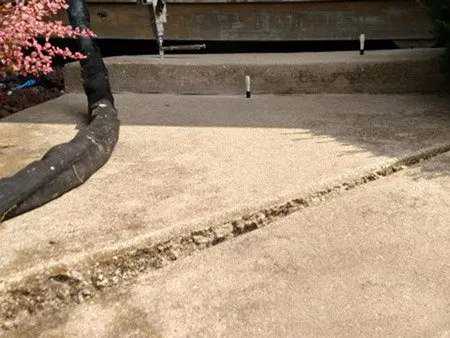
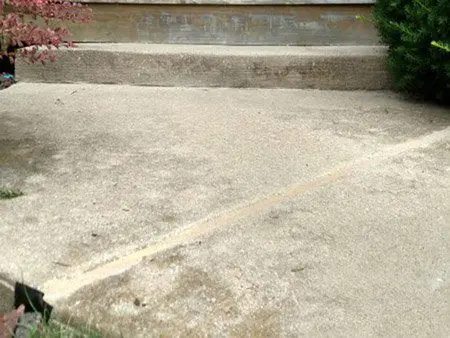
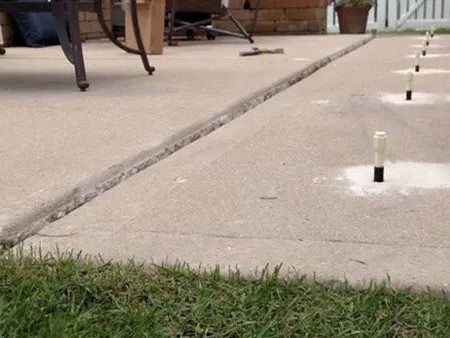
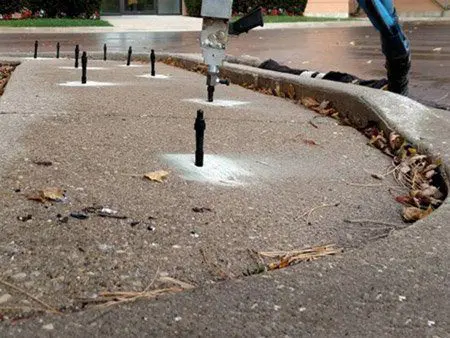
Address soil loss behind pond and water-control walls in Prospect Heights. Targeted polyurethane placement can fill accessible voids with limited disruption to the site.
Prospect Heights contains ponds, floodplain areas, and a central slough that influence how stormwater moves through the community. Repeated wetting, ponding, and runoff can carry loose backfill through joints or openings in a wall, leaving depressions and unsupported ground behind it.
Our seawall repair service starts with the wall face, cap, nearby grade, and visible erosion paths. If the structure remains suitable for stabilization, polyurethane can be placed behind the wall to fill accessible voids and help reduce continued soil migration.
A Prospect Heights repair may involve a landscaped pond edge, stormwater feature, or retaining wall near a wet area rather than a large open shoreline. We review access, drainage direction, vegetation, nearby pavement, and adjacent wall sections before choosing injection locations and defining the affected zone.
The Estimate Guard Promise: Best Price. Best Warranty. Guaranteed. With Acme’s Estimate Guard, you never have to worry about overpaying for professional concrete raising. We guarantee a better price and a better warranty than any competitor—so you get the best overall value every time. It’s our commitment to fair pricing, quality workmanship, and long-lasting results.
Frequently Asked Questions
How long does seawall repair last in Prospect Heights?
Most repairs last many years when stabilized properly and maintained.
Will seawall repair help reduce erosion?
Yes. Void filling, soil replacement, and improved drainage all help reduce shoreline erosion.
Is repairing a seawall cheaper than replacing it?
Yes. Repairing and stabilizing a seawall is typically much more affordable than a full rebuild.
Can a wall beside a detention pond be evaluated for repair?
Yes. The wall type, condition, access, erosion pattern, and role of the pond must be reviewed first. Some serviceable walls are candidates for targeted void filling, while other conditions require a different repair scope.
How can ponding create soil loss behind a wall?
Water can enter open joints, cracks, penetrations, or gaps near the wall base. Repeated flow may carry fine soil away and gradually form depressions or unsupported areas behind the structure.